NEW!
NEW!




Updated Edition!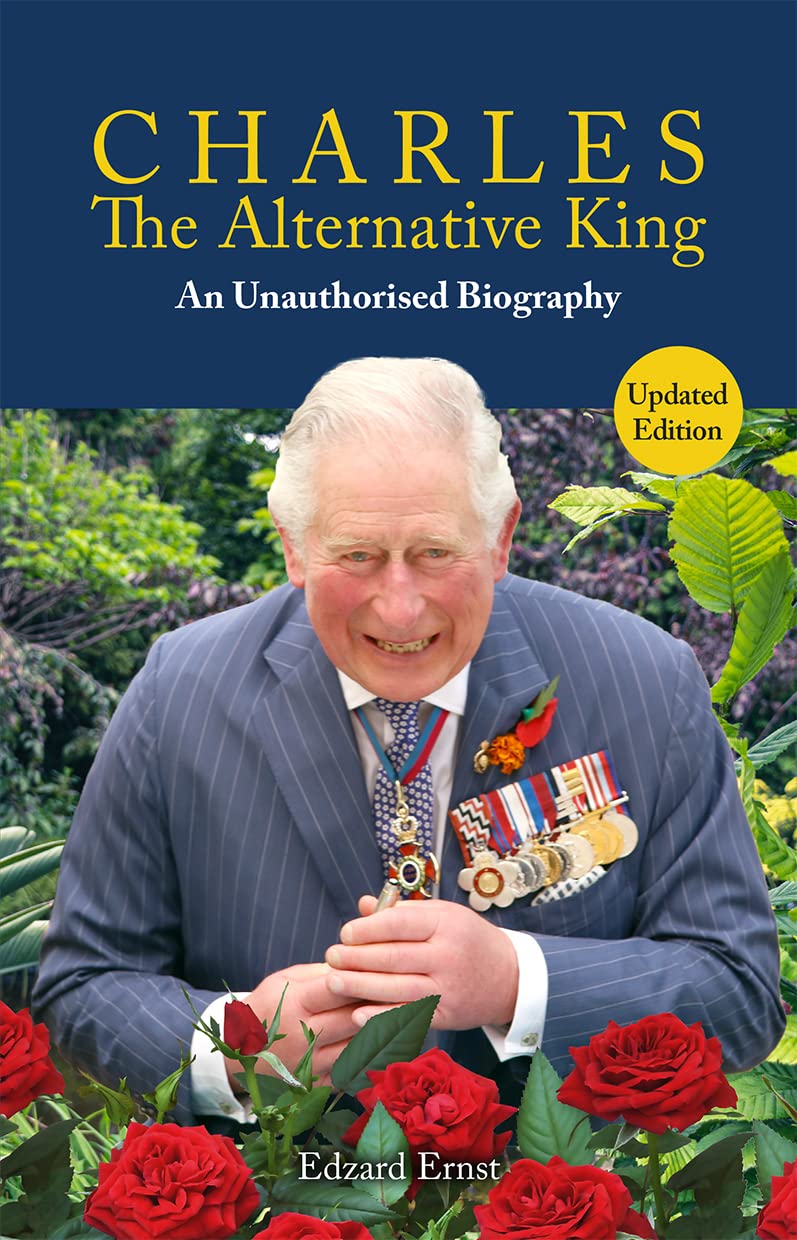

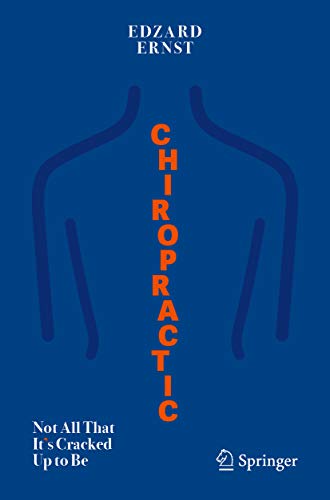









In a recent decision by Ontario’s Licence Appeal Tribunal, health insurer Aviva was successful in defeating claims for thousands of dollars in chiropractic treatments. At the same time, Aviva was ordered to fund a legitimate chronic pain assessment. This ruling highlights a systemic issue within the practice of chiropractic: the tendency to push for long, repetitive, and costly interventions without reasonable objective clinical justification or sufficient evidence of therapeutic benefit.
At the centre of the dispute were three separate chiropractic treatment plans comprising 30 sessions worth over $9,000. The claimant argued these sessions provided pain relief, yet the adjudicator found no contemporaneous, corroborating evidence that the treatments yielded even temporary relief or functional improvement. Furthermore, the patient’s family physician originally had recommended physiotherapy and massage, and not chiropractic adjustments. Independent general practitioner assessments revealed that the claimant had reached maximal medical recovery, with no objective musculoskeletal impairment remaining to justify further manual manipulations.
This case exposes a core criticism surrounding the chiropractic business model: the tendency to treat patients much longer than medically required through open-ended treatment cycles that lack the backing of reliable evidence. While evidence-based medicine prioritizes quantifiable physical recovery and time-limited rehabilitation, chiropractic care all too often relies on little more than hunches to justify continuous billing.
Crucially, while the tribunal rejected the chiropractic claims due to a lack of proven effectiveness of chiropractic, it ordered Aviva to pay for a multidisciplinary chronic pain assessment. This contrast underscores a vital distinction in current healthcare: genuine chronic conditions require thorough clinical evaluation by qualified medical professionals to investigate underlying pathologies, rather than ongoing passive spine manipulations which do not demonstrably benefit the patient while nicely filling the chiropractor’s bank account.
In my view, the tribunal’s decision serves as a timely reminder that healthcare resources are finite and must therefore be spent wisely. This means employing, whenever possible, treatments that have a solid evidence base and throwing overboard those that don’t. Chiropractic and many other forms of so-called alternative medicine (SCAM) belong into the latter category.
When it comes to irresponsible advice and actions on vaccine policy, Robert F. Kennedy Jr. long seemed unsurpassable. But now it has been reported that Donald Trump may well be worse.
Multiple media outlets have reported that Trump repeatedly pressured his Health Secretary to prioritize scaling back childhood immunizations and intensify federal inquiries into long-debunked vaccine-autism claims. During White House discussions, Trump urged Kennedy to accelerate efforts to overhaul the national schedule, leaning into rhetoric he has repeated for years: “They pump so much stuff into those beautiful little babies, it’s a disgrace,” and suggesting that reducing or eliminating shots could curb autism rates.
For his part, Kennedy has eagerly echoed this anti-vaccine sentiment, publicly dismissing decades of clinical consensus by asserting, “The whole thing about ‘vaccines have been tested and there’s been this determination made’, is just a lie,” while insisting, “If it didn’t come from the vaccines, then where is it coming from?”
Yet while Trump formally endorsed an HHS study advocating for narrower paediatric vaccine guidelines, his administration’s attempt to execute this overhaul faced immediate legal resistance. A federal judge in Massachusetts issued a stay halting the policy changes and suspending panel appointments, leaving the regulatory framework tied up in federal appeals. Consequently, the policy outcome remains fiercely contested and has not been fully implemented.
As we all know and discussed many times on my blog, the ideological/political push to reduce childhood immunizations lacks any scientific foundation. The premise driving this agenda – that routine shots cause autism spectrum disorders or overwhelm young immune systems – has been repeatedly and authoratively debunked.
A multitude of convincing studies encompassing millions of children over several decades have consistently established no causal link between vaccinations and autism. Major paediatric and public health organizations affirm that standard immunization schedules are rigorously tested, safe, and essential for preventing lethal, infectious diseases.
Why then are Trump and Kennedy unable to see the light?
Search me!
So-called alternative medicine (SCAM) is widely used by oncology patients to manage symptoms, reduce stress, and improve quality of life. Unlike conventional treatments, SCAM is rarely reimbursed, often resulting in significant out-of-pocket costs. These expenses may contribute to financial burden and financial toxicity, yet this dimension remains understudied.
This multicenter, open-label, cross-sectional study was conducted in 2024. A standardized anonymous questionnaire collected demographic, socioeconomic, and medical data, SCAM utilization, out-of-pocket expenditures, and distress levels (NCCN Distress Thermometer). Descriptive statistics, Chi-square tests, Pearson correlations, and independent t-tests were applied.
A total of 209 patients (median age 62.6 years, 52.6% female) participated; 57.4% reported SCAM use. Female patients were more likely than males to use SCAM (p < 0.001). Among SCAM users, 71.7% incurred out-of-pocket expenses, averaging €124/month for women and €153/month for men. Expenditures were highest among patients with hematological malignancies (€229/month). A strong positive correlation was observed between the number of SCAM modalities used and monthly costs (p < 0.001). No significant difference in distress was found between SCAM users and non-users; however, female SCAM users reported lower distress than their male counterparts (p < 0.05).
The authors concluded that SCAM use is common among German oncology patients and generates substantial out-of-pocket costs, particularly in vulnerable subgroups. When combined with cancer-related income loss, these expenditures increase financial burden and may contribute to financial toxicity. Integrative oncology models, reimbursement strategies, and patient counseling are essential to mitigate economic vulnerability and ensure equitable access to supportive care.
This survey confirms data that has repeatedly been shown previously. SCAM is far from being free to patients, and for many of the most vulnerable the costs add to the burden of being ill. I do agree with the authors in all the points they make
…
except one.
The conclusions seem to imply that the solution to the problem is to find ways of funding SCAM from the public purse. This may sound reasonable to SCAM advocates. Yet, to me, it does not.
I think the rational way to deal with this issue is to:
- determine which SCAMs do and which don’t generate more good than harm for cancer patients;
- discard the SCAMs that are not beneficial or even harmful;
- find ways of paying for those that do work.
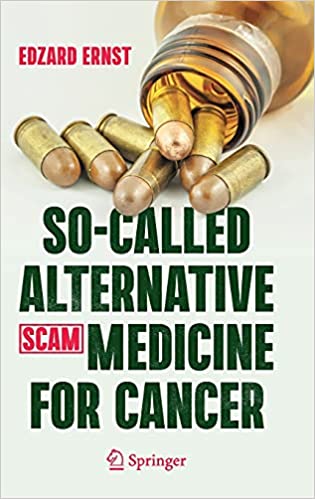
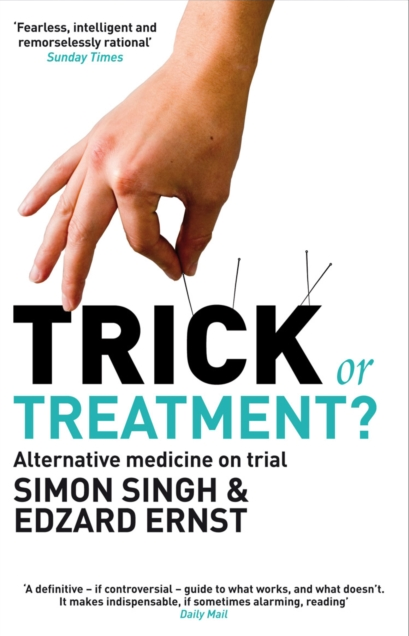
In my recent book, I have tried to sort the wheat from the chaff in the realm of SCAM for cancer. I think, it might offer a reasonable starting point for the above process.
Dr. Anthony Fauci is a scientist/physician/immunologist who spent more than 50 years at the National Institutes of Health, nearly 4 decades as director of the National Institute of Allergy and Infectious Diseases, and served as key advisor to multiple US presidents,
Robert F. Kennedy Jr’s qualifications, experience and achievements amount to less than a bag of peas. Yet, he presents himself as a fearless truth-teller in all things medical. In attacking Fauci, he said, “Because of Dr. Fauci’s leadership and other reasons, we had the highest mortality rate from covid of any country in the world”.
That statement is clearly false, extremely vicious and hugely libellous! Total deaths and mortality rates are two different things – and if Kennedy is too uneducated to know the difference, he has advisors who should tell him.
Kennedy seems to view public health as a conspiracy, claiming that experts “lied,” that dissent was “marginalized, vilified, demonized, censored,” and that Fauci’s focus was “on promoting himself, on getting on TV and not doing public health”. Those are polemical charges, not evidence-based arguments, and they fit a broader record of COVID misinformation that fact-checkers have repeatedly challenged.
Kennedy’s method is to seize on uncertainty, exaggerate it, and then present his own misinterpretation as proof. That is not merely intellectually sloppy, but medically irresponsible. The pandemic exposed real failures in communication and policy, yet Kennedy’s response has been to convert legitimate criticism into sweeping accusation, which only deepens public mistrust without improving understanding.
Here are a few further falsehoods by Kennedy about Fauci and his considerable achievements:
- “We literally did worse than any nation in the world.”
- “…we were lied to.”
- “There are many things that [Fauci] said that we know are lies.”
- “His bizarre and inexplicable actions give credence to the suspicions held by many Americans that Dr. Fauci is working to prolong the epidemic in order to impose expensive patented drugs and vaccines on a captive population…”
- “While Dr. Fauci held us hostage waiting for what turned out to be imperfect vaccines, his own agency attributed over half a million deaths in America to COVID.”
I find it bewildering that there are some US citizens who trust Kennedy, and I find it even more bewildering that they believe he is more reliable than Fauci.
The term “biohacking” can be traced to Michael Schrage, who used it in a 1988 Washington Post piece entitles “Playing God in the Basement”. The original sense of the word was homegrown, do-it-yourself biological experimentation, especially the idea of applying hacker-style tinkering to biology.
The modern biohacker has morphed into something even more ridiculous. He is rarely seen without a bottle of expensive designer water, a glucose monitor, a watch that takes his ECG intermittently, and the superior expression of someone who has outwitted biology. His creed is simple: if my body feels less than perfect, do not rest, reflect, and certainly do not seek proper medical care; instead, purchase something that promises optimisation.
So-called alternative medicine (SCAM) is the biohacker’s natural habitat , not least because it offers what evidence-based medicine cannot provide: excitement, indulgence, drama, and mystery. Conventional medicine is known to be tedious in the way evidence, knowledge, and science often are. It asks for trials, doses, mechanisms, proof, and outcomes. SCAM prefers vibes, anecdotes, and the kind of certainty usually reserved for fortune cookies.
The biohacker speaks eloquently about inflammation, mitochondria, hormones, quantum effects, and “ancient wisdom,” typically in the same sentence and with equal confidence. For him, a detox is not a real detox unless it also offers a spiritual purge; a supplement is not a supplement unless it promises to restore something modern life has stolen from him, such as vitality, masculinity, or the ability to wake up at dawn without resenting humanity. If a SCAM cannot be proven, it can still be marketed. If it cannot be marketed, it can still be rebranded as a journey.
The biohacker distrusts institutions yet trusts any odd charlatan on the internet who sells expensive powders with mysterious ingredients. He defames “Big Pharma” while buying a dozen unregulated capsules because his favourite wellness influencer, speaking from a candlelit kitchen, assures him that natural means safe. He rejects medicine for being impersonal, then spends his money on the anonymous wellness market.
The biohacker rarely wants merely to be healthy. Health is too modest a goal. He wants to become enlightened, upgraded, purified, encrypted and, if possible, immortal. Ageing offends him because it is vulgar. He wages war on his own body with ice baths, fasting, powders, nootropics, and devices that make him feel invincible.
And yet biohacking boils down to a pitifully vulgar story: fear mutated into commerce. Fear of mortality, fear of decline, fear of being ordinary. SCAM supplies the myths that soothe those fears; biohacking supplies products to monetize them. Together they form a perfect alliance of wishful thinking and premium fees.
Robert F. Kennedy Jr.’s continuous and vocal pledge to end the FDA’s “war” on “peptides” represents a dangerous dilution of modern medical standards. Under the guise of health freedom and biological innovation, Kennedy is championing a market saturated with unproven, potentially unsafe remedies including so-called alternative medicine (SCAM) trading sound clinical science for corporate wellness-hype.
The core issue lies in a fundamental misunderstanding. “Peptide” is merely a chemical classification for a short chain of amino acids, not an automatic seal of therapeutic safety or effectiveness. While rigorous scientific inquiry has yielded several life-saving, FDA-approved peptide drugs, e.g. insulin and GLP-1 weight-loss medications, the wellness and SCXAM industry systematically exploits this terminology. By wrapping unapproved injectables in pseudo-scientific jargon, charlatans sell promises of rapid recovery, muscle gain, and anti-aging to consumers who assume “natural” means safe. The word “natural” is merely used as a marketing tool; in fact these products are produced sythetically.
Pharmaceuticals must earn regulatory approval through rigorous, multi-phase human clinical trials that meticulously establish proper dosage, efficacy, and adverse effects. In stark contrast, the peptides Kennedy is going on about are sweeping the grey market while lacking adequate evidence for both efficacy and safety. Injecting these remedies exposes consumers to severe risks of product contamination, mislabelling, and toxicity.
Sanctioning unapproved SCAMs under the banner of health optimization undermines evidence-based medicine. Kennedy’s policy direction does not liberate patients; it abdicates federal oversight, exposing the public to unregulated medical experimentation for the benefit of wellness profiteers.
So, who is hoping to profit from unapproved peptides? It seems to be the multiple business around so-called alternative medicine (SCAM):
- Under FDA rules, specialized compounding pharmacies mix customized drugs. Historically, the FDA restricted them from mass-producing unapproved peptides like BPC-157 or Ipamorelin over safety concerns. If restrictions ease, these pharmacies gain a lucrative market to manufacture and bulk-sell these formulas directly to practitioners.
- Wellness clinics and medical spas charge patients premium prices – often thousands of dollars out-of-pocket – for off-label peptide injections marketed for recovery, weight loss, and anti-aging. A relaxed regulatory climate would reduce their legal liability and expand the treatments they can legally bill for.
- Influencers in the fitness and “biohacking” area (e.g. podcasters and wellness figures) frequently sell or sponsor customized peptide kits and protocols online.
Direct financial holdings by Kennedy are not documented; however, political, ideological, and procedural overlaps with the SCAM industry do exist. As HHS Secretary, Kennedy oversaw the restructuring of FDA advisory panels. Recent advisory meetings reviewing peptide restrictions included doctors, compounding pharmacists, and wellness clinic owners with direct financial interests in the peptide market. Moreover, individuals aligned with Kennedy’s “Make America Healthy Again” movement publicly promote and sell peptide products, and Kennedy has publicly stated he is a “big fan” of peptides.
The main concern raised by experts about peptides is the ideological capture of regulatory policy where leadership lowers safety barriers to accommodate SCAM advocates and wellness profiteers at the expense of clinical science and evidence.
I have mentioned Kneipp medicine several times previously, e.g.:
- Clinical effects of Kneipp hydrotherapy: a systematic review
- Kneipp therapy: popular but not truly evidence-based
It is a naturopathic system based on hydrotherapy, exercise, nutrition, phytotherapy and lifestyle regulation. It has a long history and is popular, particularly in Germany. Yet, it lacks a comprehensive systematic review of its clinical efficacy from randomized controlled trials (RCT). This review aimed to synthesize existing RCT evidence to determine the efficacy of Kneipp medicine interventions compared to control conditions on mortality, morbidity and quality of life.
An initial information search involved inquiries to Kneipp institutions and practitioners. Subsequently, a systematic literature search was conducted across PubMed, Web of Science, Scopus and EMBASE, adhering to PRISMA guidelines and registered with PROSPERO (CRD420251061013). Inclusion criteria focused on human RCTs evaluating Kneipp interventions with a comparator group and reporting on mortality, morbidity or quality of life. Data extraction and risk of bias assessment (RoB 2.0) were performed by independent reviewers.
The search yielded 77 records but only 1 study met the inclusion criteria. This single included study, albeit at a low number of only 30 patients, was an explorative feasibility trial. The systematic review revealed a significant lack of high-quality RCTs evaluating Kneipp therapy as a whole concept or its individual pillars. Identified studies often suffered from methodological limitations, including small sample sizes, inadequate control groups, and lack of blinding. Institutional inquiries provided insights into teaching modalities and promotional activities but lacked robust scientific documentation.
The authors concluded that, despite its historical and cultural significance, Kneipp medicine lacks robust scientific validation from high-quality RCTs to substantiate its medical efficacy as a comprehensive therapeutic approach. Consequently, its contemporary relevance appears to be primarily rooted in traditional, wellness and commercial contexts rather than evidence-based healthcare and medical practice.
Kneipp medicine is named after Sebastian Kneipp, a German Catholic priest who became one of the key figures in the 19th-century naturopathic movement. He was born in 1821 and died in 1897 and is best known for popularizing cold-water therapies after using them himself during illness. Kneipp – who sharply rejected homeopathy – is often seen as a bridge between 19th-century “nature cure” ideas and later naturopathy. His books and methods became widely influential, especially in German-speaking countries, and the Kneipp name is still used today for spas and wellness programs. The lasting appeal of Kneipp’s approach is mostly tied to low-tech self-care, routine, and lifestyle moderation.
The lack of reliable clinical trials to test the many modalities under the Kneipp umbrella is, in my view, hugely shameful for those who earn a living from recommending it to patients. Remember: THOSE WHO MAKE THE CLAIM MUST PRODUCE WITH THE EVIDENCE! One might have assumed that amost 200 years are long enough to do it.
One of the perks of running a busy blog like this one is the fact that the most original insults come your way. One of the best in this genre is probably comparing me to Donald Trump. Our “friend” Dana Ulman is not the only one, but he does that with some regularity. For example, he recently commented this little gem: “It seems that you are now emulating America’s liar-in-chief, Donald Trump. Should I now call you Edzard Trump?! Yep, he has adopted you…OR you have adopted him!”.
As this comparison is not an isolated occurrence, I better deal with it properly. Allow me therefore to attempt my own comparison between Edzard Ernst and Donald Trump. I find the comparison intriguing, if only as a study in how thoroughly opposites can be confused.
Trump’s relationship with the truth is famously transactional: facts are useful when they flatter and dispensable when they do not. In contrast, I have spent my career demonstrating that facts and truth have the habit of existing independently of one’s preferences. Where Trump manufactures certainty, I try to interrogate it.
Both Trump and I are accused of promoting “untruths”. In Trump’s case, the accusation reflects a well-documented indifference to reality. In my case, it typically signals that a proponent of so-called alternative medicine (SCAM) is displeased with the conclusions of my research.
Our rhetorical styles further widen the gulf, I hope. Trump’s language inflates, while mine tries to deflate. Trump deals in selfishly exaggerated declarations (e.g. “the best,” “the greatest,” “nobody knows more”). I usually prefer the quieter approach of citing and explaining the data, allowing the evidence to dismantle cherished beliefs without raising its voice.
Criticism, too, is handled differently, I think. Trump counters it with more lies, denial or insult; I normally try to respond with evidence and rational arguments, an approach that is arguably more irritating, as it leaves less room for theatrical rebuttal. After all, it is difficult to argue with a meta-analysis without first reading and understanding it.
If there is a shared trait, it is our ability to provoke. Yet even here, the symmetry is illusory. Trump provokes by disregarding evidence; I often try to provoke by insisting on it. The former invites belief without proof; the latter demands proof before belief.
It therefore appears that likening me to Trump (or vice versa) serves less as an argument than as an all too transparent attempt to avoid one. Still, I must confess a certain appreciation for its unintended comedy. In that spirit, I am tempted to thank Dana – and to encourage him to continue, if only in the hope that his future contributions might prove even more entertaining.
Keep up the good work, Dana!
And feel free to call me whatever you like.
It could only happen in Germany: a teacher reportedly spent 16 years on paid sick leave while allegedly working as a Heilpraktiker—a licensed but medically unqualified practitioner—and even winning awards for a healthcare start-up.
Regular readers will know that I have written extensively about the Heilpraktiker profession. It occupies a uniquely place in German healthcare: a profession created by the Nazis that still enjoys official recognition despite requiring no medical degree and often embracing treatments for which scientific evidence is, at best, optional.
Now the Heilpraktiker profession has surfaced in a hilarious case that reads more like satire than reality. A teacher at a vocational college in Wesel, North Rhine-Westphalia, remained on continuously paid sick leave from 2009 onwards without ever returning to the classroom. This continued for 16 years until a new school administrator stumbled over the case and discovered something extraordinary: although the teacher had repeatedly submitted medical certificates, she had never once been required to undergo an independent medical assessment.
When the school finally requested such an examination, she sued, arguing that the demand violated her civil rights. A German court rejected her claim, describing the circumstances as “truly incomprehensible” and ordered her to pay the school’s legal costs of ~ €2,500.
The baffling case has sparked nationwide debate because it exposes a remarkable weakness in Germany’s civil service system. Teachers who hold civil servant status enjoy extensive employment protections. This even includes continued payment of their full salary during prolonged illness.
The story got more complex when it was noted that, during her many years of sick leave, the teacher established a healthcare start-up and worked as a Heilpraktiker. German civil servants require prior approval for any secondary employment, and working while claiming to be medically unfit inevitably raises questions about the legitimacy of the underlying illness.
So, will the 16 years of salary amounting to about half a million Euros be recuped? Probably not! The legal expert Ralf Delgmann noted that recovering a salary already paid would be extremely difficult. Demonstrating retrospectively that someone was not genuinely incapacitated over a period of 16 years would be an evidential challenge bordering on the impossible.
Trump’s appearance at the rescheduled White House Correspondents’ Dinner yesterday rapidly descended into a public unravelling. Rather than using the occasion to project confidence, humour and presidential composure, he transformed it into a rambling assault on the press, political opponents and even the organisers of the event. What should have been an evening of wit and satire became yet another illustration of his primitivity and increasingly erratic behaviour.
Perhaps the most revealing aspect of Trump’s performance was not its length but its tone. The Correspondents’ Dinner traditionally rewards self-deprecating humour, demonstrating that a president possesses enough confidence to laugh at himself. Rejecting that convention entirely, Trump resorted to personal insults, inelegant mockery and familiar grievances, singling out journalists including Kaitlan Collins, Anderson Cooper and Don Lemon.
When one of his remarkably crude jokes failed to resonate, he neither recovered gracefully nor moved on. Instead, he blamed his speechwriters, dismissed his prepared remarks as “frickin’ stupid”, and publicly distanced himself from his own performance. Rather than displaying resilience, he exposed an inability to cope with even mild social failure.
In my view, Trump’s behaviour is psychologically revealing. It reflects a personality style characterised by grandiosity, a profound need for admiration, low tolerance of frustration and hypersensitivity to criticism. Individuals with pronounced narcissistic traits often externalise failure, shifting blame to others rather than accepting responsibility themselves. Trump’s spontaneous denunciation of his own script was a textbook example of this defensive manoeuvre. Rather than adapting to an audience that was not responding as hoped, he converted an awkward moment into yet another occasion of victimhood and betrayal.
Equally striking was Trump’s inability to modulate his behaviour to suit the occasion. Intelligent political leaders recognise the demands of different settings and adjust their tone accordingly. Yet, Trump appeared unable to distinguish between a campaign rally and an event designed around humour and mutual tolerance between politicians and journalists. His persistent return to personal grievances shows not merely poor political judgement but impaired behavioural flexibility.
From a medical perspective, the performance also raises questions about executive functioning. Executive functions are the cognitive processes responsible for planning, inhibiting inappropriate responses, adapting to changing circumstances and regulating emotions. Throughout the speech, Trump abandoned prepared material, drifted into tangential attacks, failed to recognise when jokes were unsuccessful, and did to recover from minor setbacks.
Of course, none of these observations proves neurological pathology, and no diagnosis can responsibly be made from a public appearance alone. Nevertheless, together with uncounted similar events, they are behaviours compatible with diminished executive control and reduced cognitive flexibility.
I fear that the evening confirmed a now all too familiar combination of narcissistic defensiveness, impulsivity and poor emotional regulation. The performance showed strikingly poor judgement, limited adaptability and an inability to restrain impulses. For a man in Trump’s position, that was probably the most revealing aspect of the evening. My concern is not that his poor joke fell flat; politicians survive this sort of thing all the time. My concern is that, when confronted with even a trivial setback, Trump is incapable of responding adequately.
Personally, I would be less concerned about the future of the world, if Americans would finally realise what is happening and get this man out of the White House.